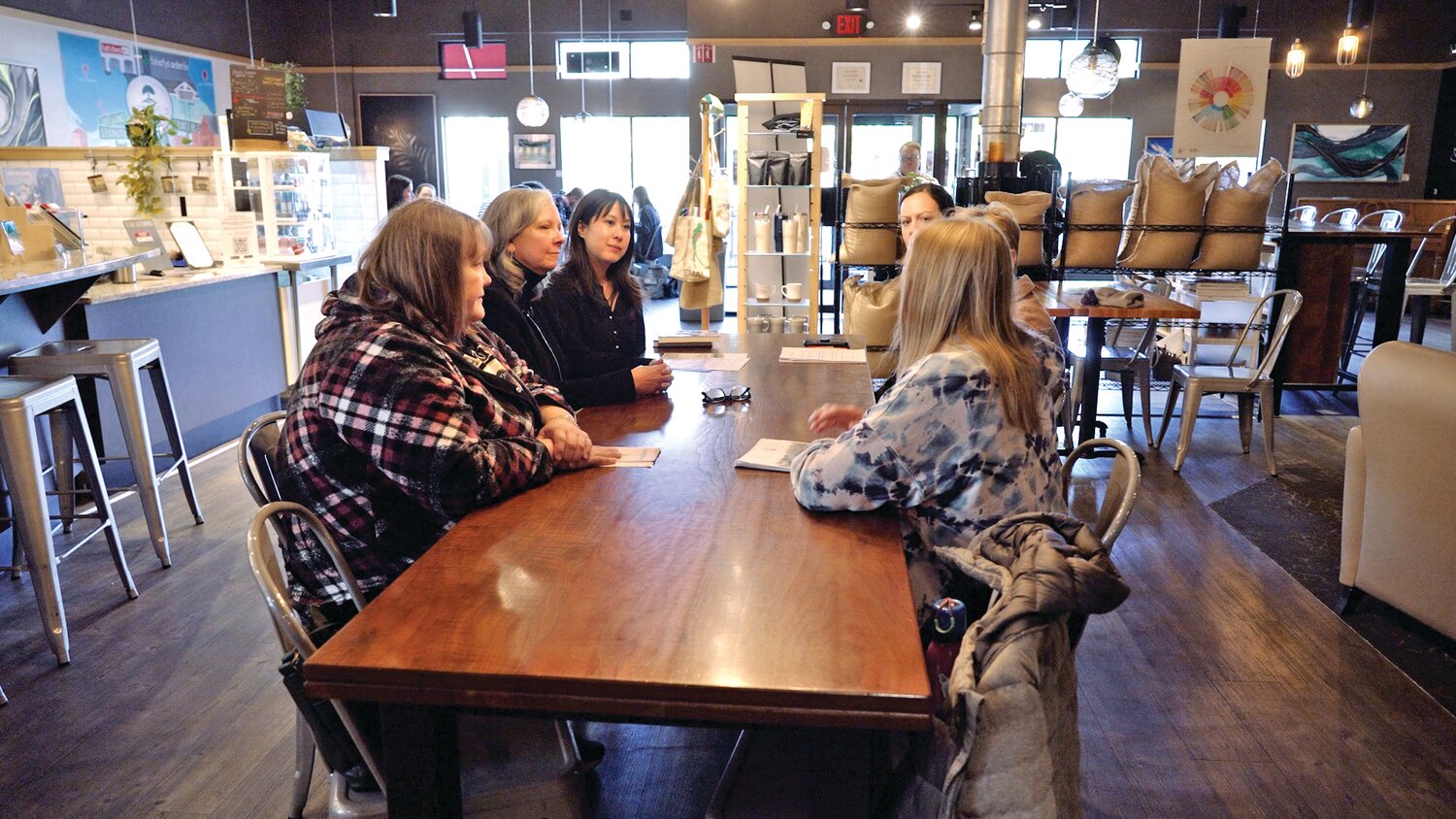
Not many people are comfortable talking about death and dying, at least not in the middle of a coffee shop.
But for LeeAnne Watkins, conversations around death are a part of the job. She’s the director of spiritual care for Beyond Hospice, a nonprofit providing at-home and inpatient care for patients in the greater Minneapolis-St. Paul area. Before that, she was a parish priest. As such, she’s spent a lot of time alongside people who are dying and their family and friends.
To some, hospice can be a scary word. But Watkins says there’s a lot people don’t understand about end-of-life care. For one, the care hospice organizations like Beyond Hospice provides isn’t just for the patient who is dying – it’s also for their loved ones.
In her role, Watkins and her team address the emotional and spiritual needs of the patient and their family, whatever that may look like for them.
“The spiritual care team is there to help people get to that place where they can look at what has been done, and what has been left undone, and let it be,” Watkins said.
There are four phrases Watkins says she often instructs families to say to their loved one who is dying, both to help ease their passing and ease their own loss. They are: “I love you,” “Thank you,” “I forgive you,” and “Please forgive me.”
These phrases have been referred to as the “four gifts of hospice,” although their roots can be traced to cultural healing rituals. It was also briefly mentioned in an episode of the popular Emmy Award-winning television series “The Pitt.”
These days, Watkins says she encounters more and more people who have no experience being around someone who is dying, or what she calls the “physical practices of death and dying” such as a funeral.
“A lot of what we do [as a hospice organization] is teach these things,” she says. “We tell people ’you can come close, you can touch their hand, this is what happens next, this is how to do a funeral, this is what a funeral home does.’”
Watkins says society had already been trending away from one set of cultural norms or expectations for processing death, but the COVID-19 pandemic accelerated that transition.
“We lost anchor with our traditional ways of being near people who are sick and dying and traditional ways of doing funerals, and became kind of rudderless,” she said.
During the height of the pandemic, many people died without their loved ones physically present. With large gatherings discouraged, families often had to delay funerals or celebrations of life, or hold them virtually.
“We were already becoming that way, but I think we really are now,” Watkins said. “It pushed us into digital ways of remembering and mourning when we never had that before. I’m not saying that’s good or bad – I’m saying that’s new. And it stuck. Those things stuck. And I think it changed our culture in ways we haven’t figured out completely. And I’m not sure that we know what the psychological ramifications of that are long-term for grief or for community.”
Organizations like Beyond Hospice also provide bereavement care for families after a patient’s death, for months afterwards. In helping patients and their families through this transition, Watkins says she has found herself wishing more people started thinking about what they want their own death to look like sooner.
Watkins hosts panels and group discussions aimed at encouraging more open conversations among family members about death and their end-of-life wishes.
“I found that this is a way of preparing that gives people great peace. It gives them great peace to know how a loved one feels about life or death or their own death or how they feel towards them. It really helps people,” she said.
She also wants people to think through the more practical aspects of dying, such as organizing your financial affairs and having a plan for your physical stuff.
“The number of families I talk to two weeks, four weeks, eight weeks, 16 weeks (after their loved one has died) who are still dealing with messy paperwork and financial untidiness, and left messy closets and basements and storage containers,” Watkins said. “It causes extra trauma for a family after someone’s gone. Half the phone calls I make are family members left behind wishing their loved ones had taken care of those things.”
Death may be a taboo subject for some people, but Watkins doesn’t think it needs to be.
“It’s a kindness to think this through,” she says.
Watkins recommends checking out the resources at the website deathoverdinner.org. And keep an eye out for Watkins at local cafes like The Finnish Bistro in St. Paul’s St. Anthony Park neighborhood, where she’ll be hanging out with a sign that says “Do you want to talk about death?” Even if no one stops to chat, she hopes it prompts more people to consider these important topics.
“I find thinking about death helps me be very clear to use the days I’ve been given, which is to me very joyful, beautiful, and intentional,” Watkins said.



Comments
No comments on this item Please log in to comment by clicking here