
Problems are a call to action. It's time to act.
In my April column for Southwest Voices, "War, taxes, and the power of local change," we asked residents to help shape the future of Minneapolis neighborhoods through a community survey and Facebook discussion.
The response showed that Minneapolis is filled with people who care deeply about their communities. And local journalism is strongest when it reflects those voices.
Hundreds of people responded. What they shared was urgent, practical, and grounded in daily life. The top concerns were public safety and crime (68%), drug use and addiction (48%), homelessness (40%), small business support and the local economy (32%), and affordable housing and rent stability (28%).
These are not separate issues. They are connected.
Beneath them is something deeper: stress, instability, disconnection, and the erosion of community trust.
If we want real solutions, we have to do more than react to crisis. We have to strengthen the conditions that help people and communities thrive before crisis hits.
That means building systems rooted in connection, prevention, healing, and shared responsibility.
On May 9 at the New City Center in Minneapolis, we took a step in that direction.
At a forum on navigating stress and building resilience with youth and families, we brought together youth, caregivers, health experts, researchers, and community leaders for a bilingual restorative conversation about what it takes to strengthen well-being in everyday life.
The event was hosted by the Strong Mind Strong Body Foundation and its Youth Community Journalism Institute in partnership with Carmen Robles and Associates, Conversaciones de Salud, and the Masonic Institute for the Developing Brain (MIDB) as part of our Brain Health Solutions for All initiative.
The goals were simple: create space for honest conversation, connect families with resources, center youth voice, and generate community-driven ideas for action.
Youth ages 11 to 13 helped lead the discussion alongside health professionals, researchers, and community leaders. We held a restorative talking circle with interpretation available in English and Spanish, followed by breakout groups focused on solutions.
What made the gathering powerful was its intergenerational design. Youth, parents, caregivers, researchers, health professionals, and community leaders were not divided into “experts” and “audience.” They were learning from each other in real time.
This is resilience in practice.
What emerged was not just conversation. It was a roadmap.
Participants pointed to the need for trusted community information, stronger caregiving networks, better access to food and medical support, trauma education, civic engagement, and more spaces where people feel seen, heard, and connected.
Across all three breakout groups, one theme kept resurfacing.
Resilience is not individual. It is collective.
People emphasized storytelling, mutual aid, youth leadership, and trusted relationships. They spoke about helping families navigate challenges before they become emergencies and about building stronger bridges between institutions and communities.
One moment that stayed with me was a conversation with Dr. Maria Kroupina from MIDB about the healing power of stories. It reinforced something we are seeing again and again.
Storytelling is not just reflection. It is intervention.
As 13-year-old youth journalist Kamille Wilson shared at the forum, "Resilience is inside you. It’s something you’re born with."
Stories help people feel less isolated. They build understanding, trust, and empathy. And they move people toward action.
After the event, participants, speakers, and youth shared that they wanted more programming like this. Many said the gathering exceeded expectations because it felt collaborative, restorative, and community-led.
That matters.
Our "Brain Health Solutions for All" year-long pilot program with MIDB has now provided a strong proof of concept for a community-centered model connecting brain health, storytelling, youth leadership, and resilience.
We believe this model is ready to replicate and scale.
This summer, we are launching Community Lowdown/El Pulso de la Comunidad, a new multilingual youth community media initiative in partnership with Viviana Salazar and Nuestra Lucha MN.
The program will include weekly newsletters, biweekly video news, monthly print publications, and community events in English and Spanish.
Youth will serve as co-hosts, reporters, editors, producers, and storytellers, building journalism, civic engagement, and critical thinking skills while working alongside community mentors.
The goal is to turn trusted information into action and strengthen communities.
Because what we heard in our survey, what we heard in the room on May 9, and what we continue to hear across Minneapolis is consistent.
People are not waiting for solutions. They are already building them.
The role of journalism — and all of us — is to connect those efforts, amplify them, and help them grow.
We are not only reporting on resilience.
We are practicing it.
Together, we build what comes next.
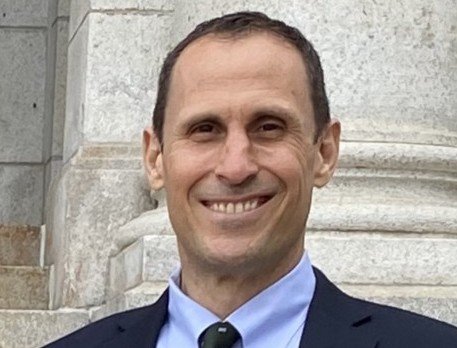
Eric Ortiz lives in the Wedge with his family. He is executive director of the Strong Mind Strong Body Foundation, a national youth and community development nonprofit based in Minneapolis, and associate director of research for The Pivot Fund, a venture philanthropy organization that invests in community newsrooms serving underserved communities.



Comments
No comments on this item Please log in to comment by clicking here