
“The mind can circumvent all obstacles to action, and turn them to the furtherance of its main purpose, so that any impediment to its work becomes instead an auxiliary, and the barriers in its path become aids to progress.”
— Marcus Aurelius, Meditations, Book 5, Section 20
More than 1,800 years ago, Marcus Aurelius reflected on a question that remains relevant today:
What do we do when the path forward is blocked?
Every community encounters obstacles. We face broken systems, disconnected relationships, inequities that have persisted for generations, and challenges that can make meaningful change feel impossible.
The easy response is to wait.
Wait until conditions improve. Wait until there are more resources. Wait until the conflict is resolved. Wait until someone else creates the conditions for change.
But restorative work asks us to consider another possibility: What if the obstacle itself becomes part of the path forward?
Marcus Aurelius was not suggesting that obstacles are imaginary or that hardship should be accepted. He was offering a different way of seeing challenges. External circumstances may prevent us from doing exactly what we intended, but they cannot prevent us from choosing how we respond.
The obstacle is real. The harm is real. The challenge is real.
But so is our capacity to respond with courage, compassion, and purpose.
This idea is at the heart of restorative justice.
Restorative justice does not begin by pretending harm did not happen. It begins by acknowledging what happened, listening to the people affected, taking responsibility, and creating opportunities for healing and repair.
The goal is not to erase the past. The goal is to transform what happened into the foundation for a different future.
In restorative work, conflict and broken relationships are not barriers to overcome. They are invitations to engage more deeply with one another.
They ask us:
Can we listen differently?
Can we understand one another more fully?
Can we create spaces where people are accountable while also believing in their capacity to change?
Can we repair what has been damaged?
These questions matter because communities are not built by avoiding challenges. They are built by how we respond to them.
Across Minneapolis, I have seen this through youth journalism, community storytelling, and neighborhood-based initiatives. Young people interviewing elders about the histories and futures of their neighborhoods. Participants in restorative circles building resilience through honest conversation. Neighbors gathering in community gardens to share stories across generations. Public spaces becoming places of connection rather than division.
Again and again, I have witnessed the same truth. Every act of repair begins with a story.
A story allows us to see one another differently. It moves us beyond statistics and assumptions and helps us recognize our shared humanity. It reminds us that behind every challenge is a person, a family, a history, and a hope for the future.
This is why storytelling is more than a way to document change. It is a way to create it.
When people tell their own stories, they strengthen their ability to imagine what is possible. They move from being defined by problems to becoming authors of solutions.
The obstacles remain. The work remains difficult. There are no shortcuts.
The question is not whether we will encounter obstacles.
We will.
The question is what we will do with them.
Will we allow obstacles to define what is possible? Or will we transform them into opportunities for connection, accountability, and repair?
Every era has its own unique challenges.
Today, we are living through a moment of profound uncertainty. Technology is changing how we communicate and connect. Trust in institutions continues to decline. Communities are navigating deep divisions that require new forms of collaboration and imagination.
The path forward requires more than ideas. It requires practice.
Communities are not defined by what happens to them. They are defined by how they respond, repair, and reimagine together.
This is the work happening every day in communities across Minneapolis: neighbors coming together, listening across differences, and creating new possibilities from shared challenges.
Marcus Aurelius understood that the obstacle and the path are often the same. Restorative work offers a similar lesson. The places where we experience harm can also become the places where healing begins, if people choose to engage, listen, and repair together.
A restorative society will not be created by waiting for perfect conditions.
It will be created by people who choose, every day, to build the conditions for healing, growth, and change.
The obstacle does not have to stop us.
It can become part of how the work moves forward.
What stands in the way can become the way.
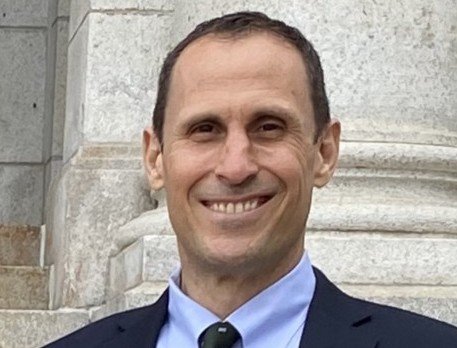
Eric Ortiz lives in the Wedge with his family. He is executive director of the Strong Mind Strong Body Foundation, a national youth and community development nonprofit based in Minneapolis, and associate director of research at The Pivot Fund, a nonprofit philanthropy organization that invests in independent community newsrooms.



Comments
No comments on this item Please log in to comment by clicking here