


It’s city budget season. You know what that means. No one’s happy.
Something is getting cut. Something is getting funded. And someone doesn’t like it.
You can’t please everyone.
But why do community programs so often get the short end of the stick?
Minneapolis faces real financial challenges. The mayor's proposed 2027 budget calls for an 11.3% increase in the city's property tax levy and the elimination of roughly 100 full-time positions as the city works to address a budget gap of more than $60 million.
Difficult financial circumstances should make us ask better questions, not just make deeper cuts.
What are we losing when we cut the programs and infrastructure that help communities connect, organize and participate in civic life?
One example is the end of the Partnership Engagement Fund, which supports projects designed to keep communities engaged, healthy, connected and safe.
Since 2021, the program, run by the Neighborhood & Community Relations team, has supported more than 150 projects bringing neighbors together across cultures and around issues including climate change, youth development, housing, addiction and safety. The city reduced the fund from $1 million to $500,000 in its 2026 budget. Now, it's going to zero.
I have a personal connection to this fund because I’ve experienced its impact firsthand.
I received three Partnership Engagement Fund grants for community projects.
One supported a pop-up market with the Lowry Hill East Neighborhood Association at Mueller Park, bringing together vendors, residents, resources, food and music to create connection and community.
The other two supported work through the Strong Mind Strong Body Foundation, bringing students, teachers, parents and administrators together for community solutions workshops with youth. We then helped put ideas generated through those conversations into action.
These projects touched thousands of people.
But the grants did something else that is harder to capture in a budget document.
They created relationships.
At Partnership Engagement Fund mixers and community gatherings, I met people who later became collaborators on youth media programs, community events, and other projects.
I met a Hennepin County program manager at a Community Connections conference.
We stayed in touch. That relationship helped lead to funding for the creation of the Ella Baker community garden.
One public investment led to another partnership. That partnership led to another project. And that project created another opportunity for young people and community members.
This is what civic infrastructure looks like.
It isn’t always a building. It isn’t always a government program.
Sometimes it is a relationship.
The proposed 2027 budget also will consolidate Neighborhood & Community Relations and Communications into a new department (CNCR), with a net decrease of 7.5 full-time equivalent positions. The city says the two departments share a mission of connecting the city and community and providing residents with information about government and services.
That deserves a larger conversation.
If the city says its mission is to connect government and community, what happens when we reduce the infrastructure responsible for making those connections possible?
This isn’t an argument against efficiency.
It is an argument for being thoughtful about what we mean by efficiency.
Through my work with The Pivot Fund, I’ve spent the past several years studying community information and civic ecosystems across the Midwest. Communities already have tremendous assets: trusted people, neighborhood organizations, cultural institutions, youth, local media, entrepreneurs, and informal networks.
The question is whether we invest in those assets.
Minneapolis needs to control costs, look for efficiencies, find new sources of revenue, and strengthen its tax base. But we also need a better way to determine which programs create the greatest public value.
Duluth offers one model worth examining: Priority Based Budgeting, or what the city calls "Budgeting for Results." The approach connects budget decisions to community priorities, program costs, and results. Duluth entered its 2026 budget process facing a projected 17% property tax levy increase and a $7.3 million deficit. Its final budget had a 3.5% property tax increase.
Minneapolis is a much larger city with different challenges. But the underlying question is the same: What are our priorities, and are we investing our limited resources accordingly?
Every department and program should be able to answer: What problem are we trying to solve? Who benefits? What does it cost? What results are we seeing? And how does this advance the priorities of Minneapolis?
Because public value isn’t always obvious on a spreadsheet.
Sometimes value is a young person discovering that their voice matters.
Sometimes it is neighbors meeting for the first time.
Sometimes it is a community garden that grows out of a relationship.
Sometimes it is a connection between organizations that leads to a new partnership, new funding, or a new opportunity for residents.
Those outcomes are harder to measure than a line item.
But they are not less valuable.
Minneapolis has to make hard choices. Let’s make those choices with a clear understanding that community is infrastructure, too.
When we cut the infrastructure that connects people to one another and to their government, we may save money today.
But we shouldn’t fool ourselves into thinking there is no cost.
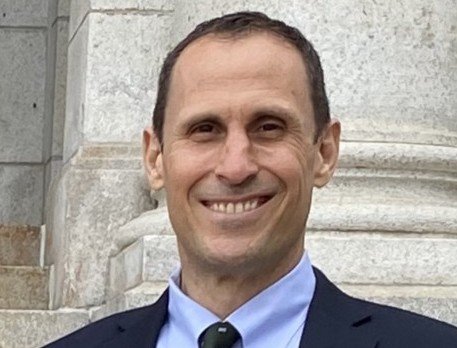
Eric Ortiz lives in the Wedge with his family. He is executive director of the Strong Mind Strong Body Foundation, a national youth and community development nonprofit based in Minneapolis, and associate director of research at The Pivot Fund, a nonprofit philanthropy organization that invests in independent community newsrooms.



Comments
No comments on this item Please log in to comment by clicking here